

The working principle of an AC generator
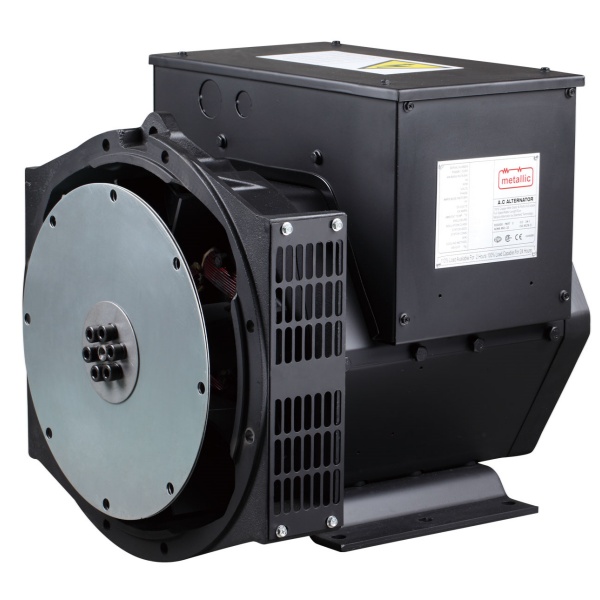
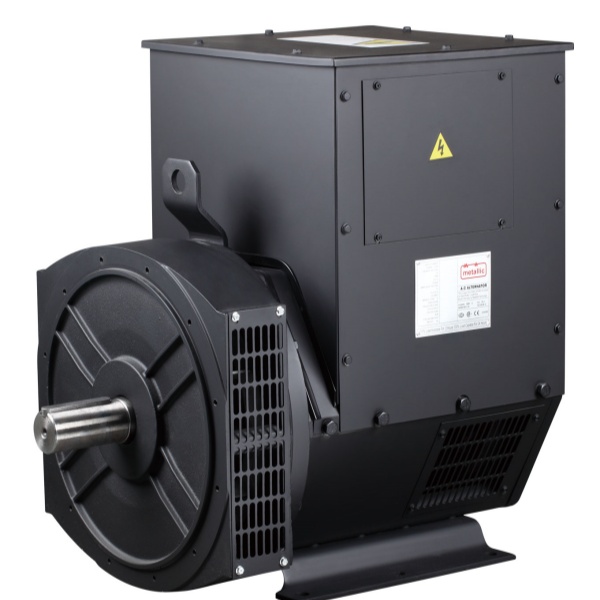
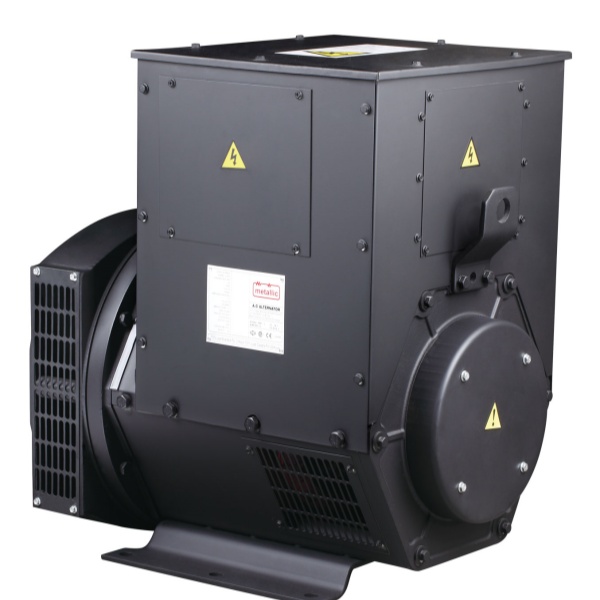
The working principle of an AC generator is based on the law of electromagnetic induction, which converts mechanical energy into electrical energy.
The following is the core work process and the synergistic effect of key components:
1. Basic structure and electromagnetic induction
The core components of an AC generator include the rotor (excitation part) and the stator (armature part). The rotor is driven to rotate by a prime mover (such as a steam turbine, water turbine, or automobile engine), and its excitation winding generates a rotating magnetic field after being energized with DC current. The stator consists of an iron core and three-phase windings. When the rotor magnetic field rotates, it cuts through the conductors of the stator windings. According to Faraday's law of electromagnetic induction, an alternating electromotive force (i.e., three-phase AC current) is induced in the stator windings.
2. Generation of three-phase AC power
The three-phase windings of the stator are distributed at 120° intervals in space. When the rotor magnetic field rotates at a constant speed, each set of windings induces electromotive force with the same frequency, equal amplitude, and phases differing by 120° from each other, forming symmetrical three-phase alternating current. This process is particularly typical in synchronous generators, where the output voltage frequency is strictly synchronized with the rotor speed.
3. Rectification and output control
The uniqueness of an automotive alternator lies in its requirement to output direct current (DC). Its built-in rectifier, such as a six-tube, eight-tube, or nine-tube silicon diode bridge circuit, converts three-phase alternating current (AC) into DC for use by onboard equipment and to charge the battery.
The voltage regulator stabilizes the output voltage by dynamically adjusting the magnitude of the rotor excitation current, preventing voltage fluctuations caused by changes in speed or load.
4. Excitation method
Initial excitation: Upon startup, DC power is provided by the battery (separate excitation) to establish the initial magnetic field.
Self-excitation stage: When the generator speed reaches a certain value, it switches to self-excitation mode, using part of its own output electrical energy to maintain the magnetic field.
5. Difference between synchronous and asynchronous generators
Synchronous generator: The rotor speed is strictly synchronized with the stator magnetic field speed, and it is widely used in power systems, providing stable frequency.
Asynchronous generator: The rotor speed is slightly higher than the stator magnetic field speed. It has a simple structure but requires the grid to provide excitation, and is mostly used in small renewable energy systems.
 The working principle of an AC
 What are the classifications o
 The alternator operates based